Tags: rockpile
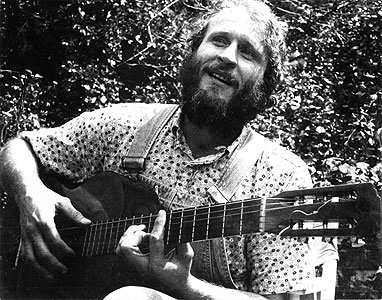
Jim Ford: Godfather to Pub Rock
By BigSteve on Dec 8, 2008
I love pub rock. There’s no clear definition of the style, but it was a mid-70s British phenomenon, a back-to-basics trend that was never wildly popular, a precursor to punk, and many pub rock musicians carried on into the punk era. Brinsley Schwarz is probably the best-known exponent of the style, which I think of as a mixture of black and white musical genres – rock, R&B, country, folk, and pop. The conversation between black and white is what rock & roll is all about to me, and pub rock was a peculiarly British take on that conversation.
I’m going to write an irregular series about pub rock here, and I want to start with a man who could be called one of the progenitors of the style. He was also a player in what could be called the secret history of rock & roll.

Jim Ford is one of those legends that almost no one knows about. If he’s known at all it’s because he wrote the song "Niki Hoeky," which was recorded most famously by Aretha Franklin on the Lady Soul album. Here’s Bobbie Gentry doing "Niki Hoeky" on the Smothers Brothers TV show. Note the authentic Cajun mise en scene:
Ford’s other claim to fame is that Nick Lowe has cited him as his biggest influence. But let me back up a bit and give a little background on Ford himself.
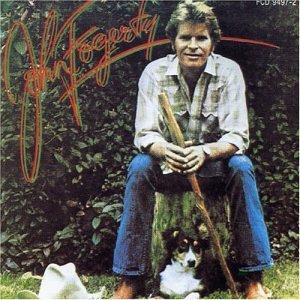
John Fogerty: Eponymously
By BigSteve on Dec 6, 2008
After Creedence broke up in 1972, John Fogerty made a bluegrass album called Blue Ridge Rangers in 1973. Then in 1975 he released an album simply called John Fogerty.

I’m not sure why this album went nowhere, maybe Fogerty’s time had passed or maybe there was no promotion. Wikipedia says that "Rockin’ All Over the World" was a Top 40 hit, though I certainly don’t remember that. I thought sure that song had a second life being covered by other artists, but my research (ok, the All Music Guide) only shows that Status Quo recorded it.
But the other great song on the album, "Almost Saturday Night," was familiar to me before I ever heard Fogerty do it. Dave Edmunds did a fine version on the Twangin’ album.
The Searchers did it on their terrific 1981 album Love’s Melodies. AMG says The Burritos, Rick Nelson, the Georgia Satellites, and Gene Clark also did it. Actually I thought both of these songs were more widely covered, but the Edmunds and Searchers albums were big in my world back then. Also I think my memory subsequently mixed in Kimberley (Soft Boy) Rew’s "Stomping All Over the World" (from the excellent Bible of Bop album). Probably influenced by the Fogerty song.
Kimberly Rew, "Stomping All Over the World"
The John Fogerty album is a little covers-heavy, but they’re done well. There are a couple of New Orleans classics – "Sea Cruise" and "I’ll Be Glad When You’re Dead You Rascal You" – but the best cover is of Jackie Wilson’s "Lonely Teardrops." That’s one of those songs you’d think should never be covered, or at least that you couldn’t cover it well, but I love this version. Fogerty throws out the cha-cha feel and just goes with a straight shuffle. He even throws out the whole middle part (“just ... give … me a … nother chance” etc) and sticks to repeating the verses. But he hits a nice groove and makes it work, which is surprising since I believe Fogerty did his thing of playing all the instruments (no credits on the album).
Oddly the tracks on this record seem more fleshed out than many CCR records. My theory is that Fogerty was such a control freak with his old band that the backing tracks often seem like demos to me. So when John started playing everything himself it paradoxically gave a more liberated feeling to the tracks.
Anyway the eponymous album seems to have become a victim of Fogerty’s label/legal troubles, so it’s currently unavailable, except for here on RTH.
John Fogerty
"Rockin' All Over the World"
"You Rascal You"
"The Wall"
"Travelin' High"
"Lonely Teardrops"
"Almost Saturday Night"
"Where the River Flows"
"Sea Cruise"
"Dream Song"
"Flyin' Away"
Technical note: This is a vinyl rip, and you may find the sound a little thin and brittle, contrary to conventional wisdom. For LPs I used to use the Loudness switch they always had on receivers back in the day, and that works fine. Nowadays when I listen to these mp3s I use the "bass booster" effect on iTunes. Your mileage may vary.
Holy F*ing Cow: Run Don't Walk: Jesus of Cool Is in da Hizzy
By sammymaudlin on Feb 21, 2008
I have bemoaned for years, and Mr. Mod can attest (say Amen, brother), the loss of Nick Lowe's masterpieces, Labor of Lust and Pure Pop for Now People (originally Jesus of Cool in the UK) to the great digital abyss.
Last time I checked these discs were released in the '90s and then vanished, showing up in used shops for as much as $89! Puh-leeze.
But you can bemoan a lot less as Yep Rock Records has just released Jesus of Cool (with the original track line-up) and "10 extra non-LP singles, EP sides and compilation cuts that lead up to Jesus."
AND IT'S ON EMUSIC!!! Sweet. Here's a bonus cut, originally released as part of the excellent Bowi ep.
Nick Lowe, "Shake That Rat"
RELATED SIDE ISSUE: Pure Pop for Now People and Jesus of Cool are two of my favorite album titles and they're for the same album! Has any other album come even close to having two drastically different release titles that are both this bitchin' and spot-on?
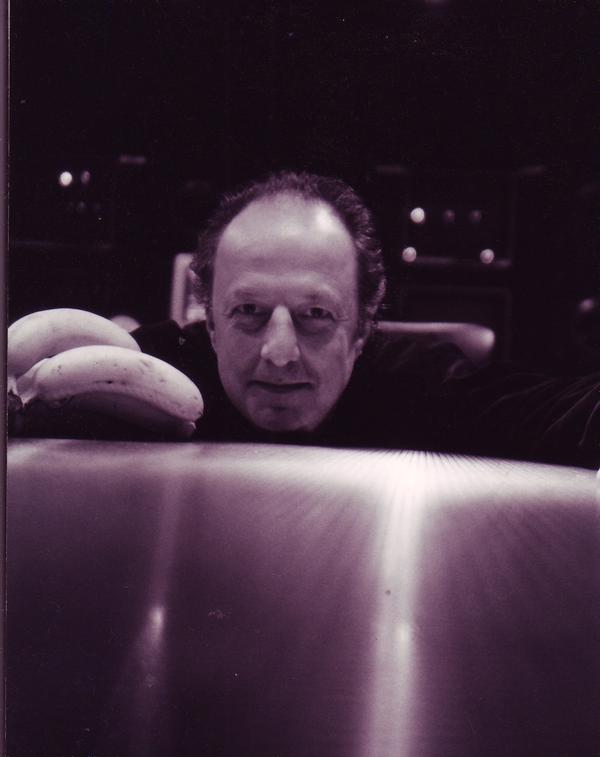
He Was a Pub Rocker, I Was a Hippy! Producer Roger Bechirian on Stiffs, Monkees, and More!
By Mr. Moderator on Feb 19, 2008

May I begin by sharing with our Townspeople what a thrill it was for me to chat with producer/engineer Roger Bechirian! As a teenager, while intently studying the liner notes of the records that first made me feel as if I'd finally hit on "my" music, music made for me and my bandmate friends, his name kept cropping up. My friends and I never saw a picture of him, and we still don't know exactly how his surname is pronounced, but this Roger Bechirian fellow was held in very high regard among our band of nobodies.
If I may, I'll continue in the first person plural, because that's how strong my love is over this guy's work - and beside, my old friends and fellow Townsmen, Andyr and Chickenfrank, contributed to this interview. Our introduction to Bechirian was as the engineer on all those great Nick Lowe productions for Elvis Costello and The Attractions. Shortly thereafter, we saw he had his own thing going as producer of The Undertones, the band in our wildest, humble dreams we thought we could emulate.
With Costello, Bechirian produced the one Squeeze album we all agreed sounded great and steered clear of the stiff, awkward moments on their earlier albums. Then we noted his name on the credits for what we thought was The dBs' last great single, "Judy". This guy not only engineered my all-time favorite album, Costello's Get Happy!!, but he produced one of my favorite overlooked gems for listening to in my bedroom with the shades drawn, The Undertones' Positive Touch. As Elvis would eventually have an album produced by George Martin engineer Geoff Emerick, we fantasized having an album produced by Nick's right-hand man. Considering the likely disappointment (for him!) resulting from this fantasized collaboration, his taking the time to answer the tough questions from Rock Town Hall is more than enough wish fulfillment for anyone to bear... But enough of this ass-kissing, no matter how sincere it is! Let's get on with the questions.
RTH: I've read that you were born in India and moved to England when you were a boy. When did you get into music and how did you get into recording?
RB: There was always music on in the house. My father was a big Jazz fan, and my sister would get all the latest hits from the UK and the States. I also played piano, and would spend hours making up my own tunes. We had a tape recorder at home, and I soon started making up my own sound montages by editing various recordings... I did the same thing as you, scouring album credits, looking for the engineering and studio credits. I got my first job training as a mastering engineer, cutting vinyl!
I was so opinionated, and couldn't stop myself from telling people what I thought they should be doing!
Rock Town Hall's First Costello-centric Post of 2008
By Mr. Moderator on Jan 2, 2008

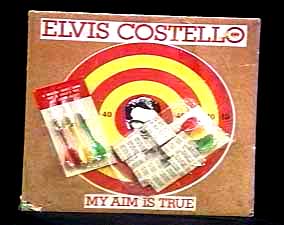
While listening to (what else) Elvis Costello and The Attractions' Get Happy!! on New Year's Eve I pinpointed exactly what made the greatest of that great string of the band's albums: Nick Lowe's production. And it's not so much what he did technically - the drum sound, the choice use of effects, the mic choice - but how he decided to capture the band for each album: that is, he captured the sound of the band. All the Lowe productions through Trust feature the full sound of both EC and The Attractions. The style of music is in no way similar, but scope is similar to what was captured on albums by The Rolling Stones, Jimi Hendrix, The Beatles, Led Zeppelin, and so many more great albums that I'd sound even more cliched and pathetic by listing them.
Elvis Costello & The Attractions w/Martin Belmont (w/o Steve Nieve), "Little Sister" (Live at the Hope & Anchor)
Imperial Bedroom has the same type of open scope, allowing for the listener to chooose to focus on any one of the instruments. Of course that album was produced by a Beatles' engineer. Compare the Lowe-produced Costello albums and Imperial Bedroom with all the rest: Costello's voice way out front and the rest of the musicians kind of canned in the background. On albums like Punch the Clock and Spike I might as well have been listening to Elvis Costello and The Association. The best of the non-Lowe-produced bunch, King of America, also sticks the musicians under glass. Quick: Name your favorite lick in a song from King of America.
Please Explain: Nick Lowe and Dave Edmunds Seek Leland Sklar?
By Mr. Moderator on Jul 30, 2007
How many head-scratching moments can you spot in this clip?
That's Cool: Nick Lowe, At My Age
By Mr. Moderator on Jun 28, 2007

As all but the most tolerant, patient, and dedicated fans of Nick Lowe probably agree, shortly after Nick's first two albums, the lone Rockpile album, and the breakup of the entire Rockpile working arrangement, the guy's career hit a long stretch of mostly unsatisfying releases. Surely one of us is a greater fan of Nick the Knife or Party of One than the rest of us, and there's probably even a Nick Lowe fan who regrets his breaking up His Cowboy Outfit, but let's be honest, the guy lost his spark when he lost that Rockpile crew and from all accounts began changing as a person.
Lowe's reemergence as an unabashedly adult artist following the release of 1994's The Impossible Bird or 1998's Dig My Mood, depending on when you began paying him any attention again, was a welcome and inspiring reemergence. I loved hearing this guy who'd always had a facility for classic pop traditions bear down and confront them head on. How many more mediocre to bad releases would it have taken to convince me that the guy could no longer turn pop conventions on their ear? The guy could have released 100 more albums in a "rocking" vein and never come up with another "I Love the Sound of Breaking Glass" or the exquisite "Cruel to Be Kind". That's cool, and what's cooler is that he had the great sense to get out of the Jesus of Cool business and embrace the pop conventions that have always been at the core of his work.

In an interview with Terry Gross on Fresh Air around the time of one of these mature albums, Terry asked Nick if there was a song that he loved that might suprise his fans. (This is a great question that Gross has asked musical guests over the years, and it could be a good thread for us here at Rock Town Hall someday, so keep it in mind.) Lowe's song was Tommy Edwards' ballad "It's All in the Game". He picked up his acoustic guitar and played a few measures of the song. It made so much sense, especially with his new direction. Dig My Mood and the follow up, The Convincer, each contained a few songs in that style (along with strong hints of Nat King Cole and The Platters). When he wasn't crooning on those fine albums he was doing the sort of country-soul identified with the songwriting and production of Spooner Oldham and Dan Penn. His whole "changed man"/"man who's finally found love" lyrical stance comes through loud and clear on these recordings, and I find them moving despite the "coffee table rock" aspects of The Convincer, in particular.
That brings us to his new release, At My Age. The whole adult rock/changed man thing continues to be at the foundation of his work and his publicity campaign, and that's all cool. The songs on this album are highly reminiscent of songs from his previous "mature" works, and as far as dedication to craft goes, this is somewhat cool. The arrangements and recordings are still display tremendous taste and understatement, which is very cool, but I'm not sure that I'm cool with the same batch of songs, the same lyrics, the same stance. If Lowe has dedicated golden years of his career to recrafting classic pre-Beatles pop, is he hitting the wall that halted the great works of Lieber and Stoller and associated artists, like The Drifters? Is there a reason that great stuff went by the wayside that has nothing to do with racial ceilings and moptops?
I know some of you would like me to shut up with the backstory and talk about some of the album's finest tracks, like "Long Limbed Girl", "Hope for Us All", and "I Trained Her to Love Me". That's cool. You're excited to hear a report on his breezy collaboration with former student and flame, Chrissie Hynde, on the breezy, insignificant "People Change". That's cool too. I'll tell you what, how about listening to the songs sampled here and digging them for yourself, discussing them as you see fit? Just click on the song titles with the mp3 links.
If there's any problem with this album it's that Nick and I are aging at different rates. As much as I appreciate him setting a dignified pace for rockers in their 50s - and believe me, this is a solid, enjoyable album and heads and shoulders above cynical "golden years" crap like that series of Rod Stewart Trashes the American Masters releases - I'm not ready to slow down that much yet. I want to hear Nick lash out at just one classic pop convention now and then. I know he's a changed man. I know he's finally found love, but he finally found that love 10 years ago. It's time I hear about something slightly new, pitched somewhere slightly new. We can work through this together, I'm sure, Nick. If all works out, I'll be your age one day too, and I'd rather feel what you're feeling than whatever it is crotchety old Bob Dylan's feeling on his recent releases. Maybe Bob is still putting up a fight, but I wish he'd include a tune along the way, just as I'd like to hear Nick kick back the slightest bit. That's cool, isn't it?
Prime Dave Edmunds, 1977-1981
By BigSteve on Apr 4, 2007

When the desultory video performance of "Girls Talk" was running on this site last week, some people mentioned that they were unfamiliar with Dave Edmunds’ work and would appreciate a selection of Edmunds tracks. I offered my services, since I have all of the Rockpile-era Edmunds albums in versions transferred from my old LPs and Mr. Mod was busy with moderating.
Right before this era, Edmunds was focusing on letter-perfect recreations of earlier styles -- Phil Spector, Sun Sessions, Chuck Berry, etc. – on the album Subtle As A Flying Mallet. But Edmunds had produced the last Brinsley Schwarz album, and he started working with Nick Lowe again on his next album Get It. The first 8 tracks on this selection are from that album.
The opening tack is the Bob Seger nugget "Get Out Of Denver", and the album is a mix of old and new songs. Nick Lowe fans will recognize "I Knew the Bride (When She Used to Rock 'n Roll", but the record also features two fine Lowe-Edmunds originals – "Here Comes the Weekend" and the lovely "Little Darlin’". Edmunds was always more of a traditionalist than Lowe (Graham Parker’s "Back To Schooldays" gets a nice rockabilly treatment here), but "Little Darlin’" shows the "pure pop" side of the Edmunds-Lowe collaboration.
Also from Get It:
"Worn out Suits, Brand New Pockets"
"Ju Ju Man"
"Git It"
Pinky Rock
By Mr. Moderator on Apr 4, 2007
Pinky Rock is the style of rock that centers around the rhythm guitar playing that is most readily identified with Chuck Berry, the Godfather of Pinky Rock. Surely this style of guitar playing existed before the age of Rock 'n Roll, but from Berry's pinky one of the building blocks of the genre was born.
In the Pinky Rock style, the guitarist uses his or her pinky, in most cases, to hammer from the 5th note onto the 6th note of the Barre chords he or she is playing. Sometimes the pinky continues up to the 7th note. This guitar style sets up rock's all-important backbeat. Other rhythm section instruments have been known to incorporate this hint of the 6th note and 7th notes, most notably the piano or organ (eg, Seger's "Ramblin' Gamblin' Man"), but the style of Pinky Rock, per se, specifically requires use of the guitar...and, most likely, the pinky. (Played in open-chord style or using intervals, as Pete Townshend might do in his rare uses of this style [eg, "Long Live Rock"], the ring finger can be substituted.)
Along with Chuck Berry, the commonly acknowledged Masters of Pinky Rock include Dave Edmunds and Keith Richards. John Lennon and George Harrison were particularly strong Pinky Rock practitioners but not quite as groundbreaking as the aforementioned. Consider them along with Buddy Holly and Angus Young, the style's top advocates. Billy Zoom of X performed some of Pinky Rock's finest variations, but he never committed to the style the way Edmunds did on his cover of "I Hear You Knocking".
Pinky Rock is sometimes confused with a style of Jangle Pop. It's not. Although the techniques share similarities, their intent differs. Jangle Pop guitarists are typically looking for variations and colorings within the established rhythm of a song; Pink Rock guitarist are establishing the rhythm.

"So you're telling me this will help us sell records?"
By Mr. Moderator on Mar 25, 2007
Dave Edmunds and Rockpile go through the motions to suit the new business model.