Guys — and especially gals — I want to know: what *exactly* is wrong with the following performance? I know you’ll give me some quality thoughts on this; I trust you not to just say “it suxx!”, like some RTHers I know. I want your best.


Guys — and especially gals — I want to know: what *exactly* is wrong with the following performance? I know you’ll give me some quality thoughts on this; I trust you not to just say “it suxx!”, like some RTHers I know. I want your best.
When debate over the alleged ham-fistedness of John Bonham came up the other day, it became clear to me which drummer I would first place on the examining table in a new feature I’d like to call Is There a Drummer in the House? I know we’ve got a couple of drummers checking in regularly, and I know we’ve got a number of self-appointed drum consultants on hand. As much as I value the role of the drummer, I don’t know enough about the instrument to articulate what it is I value without the aid of shooting dirty looks at a drummer and speaking in vague impressionistic terms that few drummers can understand. I’m counting on you to help me articulate what sometimes confuses me in the role and execution of drummers.
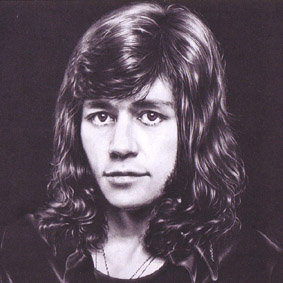
Bev Bevan, drummer for The Move and ELO. If you’ve already gotten the impression that Mr. Moderator loves The Move, you’d be right. I also grew up liking the hits of ELO as much as any Beatles-loving, lonely, love-starved teen in the ’70s, although I’m not one to spend much time filling in the paperwork toward a Critical Upgrade of their output.
In both the music of The Move and, as I listen to them with more discerning ears, ELO, I’m frequently perplexed by Bevan’s drumming chops and choices. The guy could bash like a mofo, and his bashing added an element of excitement to the records, but I can never tell exactly where the line is between heavy rock chops and poorly executed, overplayed choices.
Following are three examples of the Bev Bevan style, each of which are from late-period Move albums, that period when Jeff Lynne had joined the band and they’d fully embraced The Power and Glory of Rock, so these factors probably play a part in the resulting arrangements. Nevertheless, see if you can help me out.
The first example is “Chinatown”, a Roy Wood song not out of character with his whimsical pop numbers from the years before he’d fully committed to The Power & Glory of Rock. I love this song, but from the opening fill through the end of the song, Bev Bevan seems like he’s not paying attention to the song’s core vibe. He’s bashing away and laying into the kick drum like he’s in a street fight. Do I love this song, in part, because of or despite Bevan’s drumming?
Next, the original version of “Do Ya”. I’m not sure which version I like better, this one or ELO’s hit, but on both versions, Bevan seems a bit sluggish. It’s almost just right – or is it? Could the song have been even better with a slightly more sympathetic, nimble drummer (eg, the heavy yet not ham-fisted Bonham)?
Finally, a song on which Bevan’s drumming sounds wholly appropriate: “Feels So Good”. This, by the way, is a prime example of The Power & Glory of Rock. See if you agree that it best suits Bevan’s style. Then tell me if this is a good thing or a bad thing. Then tell me what you think of this FACT: Continue reading »
All-Star Jam. Bueno.
Contributed by Townswoman Carly.
Perusing through the Rock Town Hall Glossary, and coming across the amusing and very apt definition and description for practitioners of Holstering, I was reminded of live shows that I’ve seen, or rather musicians that I’ve witnessed, on the fantastic Road to Rock Recovery during a show.
Instances of Great Rock Recovery that I’ve personally witnessed include the stellar Plimsouls performance at The North Star Bar in Philly in 2006, where in great rock n’ roll fashion, during the song “Million Miles Away”, Peter Case strummed his guitar so hard that the strap on his guitar came unfastened and he had to hold it to his thigh throughout the rest of the song until he could get the strap onto his guitar again – he was rocking that hard – forget the strap! Play that song! Had this happened in Valley Girl too before they got the right cut?
Continue reading »
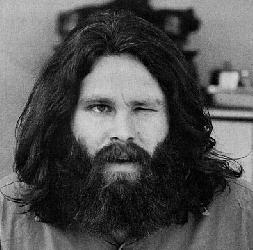
A secret poem recorded by the legendary singer Jim Morrison shortly before he died is to be released as a song to raise awareness of climate change…
Dan Morrell, the founder of Global Cool, said Morrison’s lyrics give an eerie warning of the risks of global warming. He said the song – which features the chorus “Just try to stop us, we’re going to love” – is written from the perspective of an angel sent to Earth to advise the human race about the perils they face. Mr Morrell said: “It’s very strange to hear this thing recorded more than 30 years ago that seems so relevant to the environmental challenge we face.”
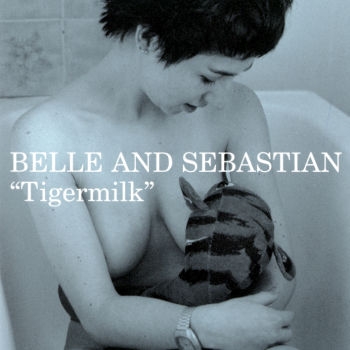
Belle and Sebastian, “You’re Just a Baby”
In 50 words or less, please describe how the album cover for Tigermilk, by Belle and Sebastian says all that there is to say, for better and for worse, about the music contained within.
Contributed by Townsman Rick Massimo.
Rug harmonies are usually wordless, usually complex, and usually thickly overdubbed to produce more vocal parts than there are band members, but always, they’re background vocals that exist for their own sake rather than the emotional illumination of a lyrics or cuing the listener to a visceral sing-along chant.
Prime classic examples come from Crosby, Stills, Nash & Young, with The Byrds close behind. A more recent, particularly awful example would be REM‘s “Orange Crush,” which lacks even the selling point of complexity and consists of a coupla guys moaning dolefully in the service of “we need some other part here.”


