Don’t just sit there, waiting for someone else to say what’s on your mind!
Many of you have heard this talk before, but for newer participants in the Halls of Rock I’ll say it again: This is your Rock Town Hall. Use the Comments section to register your dissent. Take the discussion down previously unseen paths. Knock a Townsperson off his or her high horse, if need be. Get Main Stage privileges and start your own threads. Check out the Archives. Have fun.
Actually, I mostly wanted to work the title of the following Ronnie Lane and Slim Chance song “How Come” into the title of this post, but how come we don’t talk much about Ronnie Lane? I’m game.
Lane’s first couple of post-Faces albums have some very strong moments of “small rock,” especially Anymore for Anymore, and his lead turns work with both Small and regular-sized Faces was always a treat. The album he did with Pete Townshend, Rough Mix, has its moments as well. Had multiple sclerosis not sapped his energy and cut his career and then life short, he seemed to have what it would have taken to age like one of those fine wines Hrrundivbakshi, described the other day.
There are different schools of thought about the awarding of a Most Valuable Player in any sport. Some think the MVP should go to the “best” player. Some think it should only be awarded to a player who led his or her team to the playoffs. Some believe there are cases where the MVP can come from a team that didn’t make the postseason, provided that the player accounted for an inordinately large percentage of the team’s relative success. I’m going to apply this last line of thinking to what I consider Rock’s Most Valuable Drum Part (MVDP) of its time, Steve Gadd‘s distinctive, highly technical march rhythm that is the key to the success of Paul Simon‘s catchy but otherwise slight “50 Ways to Leave Your Lover”.
It’s hard to break down how much the success of that song depends on Gadd’s part, but I’m willing to say that it accounts for 70% of the song’s success. The “make a new plan Stan” lyrical device accounts for most of the rest of the appeal of the song, say 25%, with Simon’s delivery and the bass guitar accounting for the remaining 5%. That’s a lot of weight supported by a drum beat!
The exercise I’m about to propose may assume that you agree with my premise, that the accumulated wisdom expressed in the songs of some long-running, beloved artists boils down to one Key Message. Of course, as I roll out this idea, you are most welcome to disagree with my premise or any of the particular examples that I pose. First let me make sure you understand what I’m getting at. Continue reading »
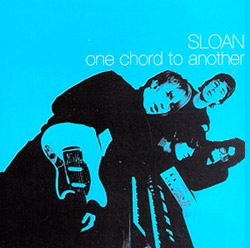
In the tradition of The Beach Boys‘ Party! record, Sloan released their own faux-live party album, Recorded Live at a Sloan Party!, as a bonus CD that came with the initial gatefold-sleeve release of One Chord to Another. In honor of our Last Man Standing: Songs in Which a Deliberate “Party” Vibe Plays as Prominent a Role in the Song as Almost Anything Else, we’re posting Sloan’s Party! album. This is a rare release I bought at the right time that makes me feel slightly cooler than usual. Pretty cool, eh? Enjoy.
Surely you know of The Beach Boys‘ Party album, a studio release that was presented as an impromptu live performance during an intimate party. Fact of the matter is, it wasn’t a live recording in the middle of an intimate party, but it’s a pretty fun album and a great concept for sounding that way. “Barbara Ann” is the best-known track from this album. Those of you who know it well can probably anticipate certain “party” sounds as well as you can any vocal or instrumental lick in the song. Pretty cool – and not the only example of its kind. So as the title of this post suggests, we’re seeking songs in which a deliberate “party” vibe plays as prominent a role in the song as almost anything else. Go for it!