
Jul 032007
 

American Hare

At the risk of being completely wrong and making a sweeping generalization, let me share an American thought. As I sat and watched the fireworks in our town tonight – and as mostly horrendous rock songs vaguely associated with the pride we feel as Americans as we re-create the rockets’ red glare – I got to thinking about that late-period, minor X hit, “Fourth of July”, or something like that. It’s a staple of AAA radio and other Coffee Table Rock outlets, but not the kind of thing you’d hear at a suburban town’s fireworks display, sandwiched between Mellencamp, Springsteen, and Diamond’s patriotic numbers. Man that song’s a real lowpoint in the already creatively spent portion of X’s career at that point!

American Wear

So I got to thinking: Why do so few American bands develop? In places like these hallowed Halls of Rock, we can go on for days, weeks, months on the various phases of any of a number of British bands, such as The Beatles, The Stones, The Kinks, The Who, Roxy Music, Elvis Costello, U2, and so on. Beside Bob Dylan, who developed from somewhat-traditional-yet-edgy folk singer to Voice of His Generation to wizened husk of his glorious self in a scant 8 or so years, who among American rock artists has developed as far as three distinct, interesting phases over the course of their career? Canadian artists who seem American, like Neil Young and Joni Mitchell, don’t count.

I can think of Los Lobos. And The Doors. And The Velvet Underground. Probably a few more, but this isn’t going to turn into Monty Python’s Spanish Inquisition sketch.

Like X, most American bands that come out of the gate on fire quickly fizzle into some low-grade version of their original American greatness: CCR, The Ramones, even Chuck Berry and his Mercury releases. There are no “phases,” no periods of development. Just the end or, worse, a painfully slow decline.

There’s the rare band like Tom Petty & the Heartbreakers, who have managed to maintain a consistently good level of the same old, same old. There’s also the rare band like Aerosmith, who managed to re-imagine themselves as an enjoyable, reliable “brand” that merely hints at what they once were.

What is it with our bands? Is it something about “American music” itself that limits development, or is it something about the American aesthetic? Perhaps I’m way off base. I look forward to your thoughts on this day of American independence!

Share
Jul 032007
 

In seeking out some tracks and an entire album by Jefferson Airplane last night, I came across an album by another SF band I’d always heard about but never heard, Sons of Champlin. The album I stumbled across is called Follow Your Heart. After checking it out last night, I’m tempted to say that I’ve finally found a SF band I can sink my teeth into: really soulful singing, nice ensemble playing, little of the melodrama that has always bogged me down with Jefferson Airplane. Along with the title track, I was impressed by “Children Know”, “Before You Right Now”, “Hey Children”, and “Child Continued”.

I encourage you to hang in there with this video.

Share
Jul 032007


Last night on eMusic I decided to revisit the genre known as Krautrock. I can’t stand that term, but on my fifth try with this genre, I think I’ve hit on some stuff I might like: a few songs by Neu! (eg, “Hallogallo”, “Fur Immer”, “E-Musik”), a half dozen songs off the first two Faust albums, and a handful of Popol Vuh songs, a band I’ve already liked and purchased albums by thanks to the soundtracks of Werner Herzog films. When I’m done spending quality time with these downloads, I’ll revisit the music of Can, a band I’ve always found lacking in anything but a few good ideas.

What do you make of this Krautrock stuff? Because I’ve disliked the term so much, I’ve barely poked at it and its likely rich mine of rock nerd knuggets of knowledge. I know John Lydon talks about the influence of this stuff on PiL, but I don’t hear that as much as I hear an influence on Martin Hannett‘s production work for Joy Division and others. This Neu! stuff I’m listening to in particular sounds like backing tracks for Ian Curtis to sing over.

Neu!, “Fur Immer”

So go ahead, call me late to the party, but now I’m here and I’m ready to catch up. I welcome your assistance and guidance, Rock Town Hall.

Share
Jul 022007
 

Designed for “comeback”

Townsman Saturnismine sent in the following thoughts and asks the Hall for its advice.

Thankfully, every now and then, the Great Big Music Machine in the Sky spits something out that’s flawed, irregular, maybe not even likable, but possessing qualities so intriguing that we can’t look away, even if we sense tragedy in the final frame. This time it’s a British soul Jewess named Amy Winehouse. She’s a one woman freakshow of mixed signifiers, a completely “hot mess” if you will: big hair, tattoos, a seemingly authentic “other woman” persona, a fine pair of husky pipes, and a feel for vocal phrasing so subtle that the utterance of a single note can make this Townsman feel connected to the Universal life force at its very source.

Just as the Summer of ’06 was The Summer of (Gnarles Barkley’s) “Crazy”, Summer ‘07 may very well go down in pop annals as “Rehab” Summer. If you haven’t heard this neo-Ray Charles handclapper in the supermarket, the Laundromat, or while waiting for Sethro Baer to fix your teeth, then you live under a rock. For cryin’ out loud, this is the song that made my mother teach herself how to download music from iTunes. For those of you who haven’t heard “Rehab” (from Winehouse’s late 2006 release Back to Black), take a listen.

It’s nice to hear a distinctive voice interpreting and performing a song. It’s also a pleasure to hear some thoughtful production that manages to sound new (without embracing studio-by-numbers, Sam Ash trends) while at the same time sounding vintage.

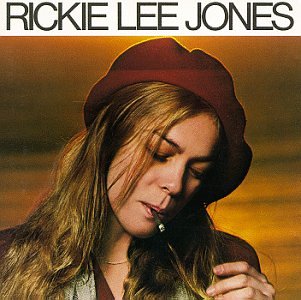
If we dig deeper into Back to Black, we find everything “Rehab” promises – and more: lyrics with intelligent word play that doesn’t obscure meaning; nuanced, but never labored sounding vocals on every track. But perhaps most impressive is that Amy wrote the songs. We hear an in-depth tutorial in the “isms” of Billie Holliday, Spector’s girl-groups, Motown, Memphis, Aretha, and Amy’s British girl forebear in the pursuit of Americanness, Dusty Springfield. Somehow, we also hear more than a few fucked-up-isms stolen from the bottom of Rickie Lee Jones’ bag of tricks. But Amy hasn’t just skimmed the surface in order to graft this or that move from her idols. She’s inspired. She “walks with” her idols rather than looking up to them. One imagines that she’s been listening to the stuff (and nothing but this stuff) and singing along all her life.

The combination of sadness and bounce in “Me & Mr. Jones” is so evocative of a post-war/pre-Beatles past that it automatically conjures images of too much lipstick, cat glasses, and grainy 8-mm movies of children in footy pajamas around Christmas trees spliced with, oh, I dunno…equally grainy footage of JFK’s head splattering all over Jackie O’s pink coat. But what really make “Me & Mr. Jones” special are little moments like the one at 0:20. Check how Amy drops her throat into her heels to sing the words “Slick Rick gig.” If we suspected, before this utterance, that we were listening to the bitch offspring of Ma Rainey, Billie, and Ronnie, we’re sure of it by 0:26.

The album’s crowning jewel is “Love is a Losing Game”, a pungent chunk of turf from Nelson Riddle’s backyard, featuring a devastating, harsh, but vulnerable and hesitating vocal. At 0:46, Amy tosses the word “love” across a sea of strings with a sad carelessness rarely mustered by singers in any era. Effortlessly, she has shared with us an exceedingly private moment, when she has mournfully, but absentmindedly thrown something into the dustbin that was once more important to her than anything else in the whole world; heartbreaks have turned love into a trifle that has been gathering dust on the mantle, something obsolete that needs tossing before it becomes a problem again.

Choose any moment to focus on her voice, you’ll find stuff like this. Back to Black is an ocean full of treasures buried beneath the gravel at the bottom of the sea.

And if there’s any question as to whether or not Amy can bring this kind of heat live, search Youtube for her Letterman performance, or check this one: a cracked, yet powerful reading of “Rehab”…

…all while fixing her hair! Say what you want about some of the more affected vocal stylings in this appearance, the girl’s got “stuff.”

And this is where it gets complicated. Continue reading »

Share
Jul 022007


Did you know that as of this March, a group in Japan was awarded as the current record holders of the World’s Longest Concert? Beating out Canada (who held it since 2002) in the Guinness Book (to my own chagrin). On Thursday night, when The Fiery Furnaces played, the audience was put to the test for almost an hour and 45 minutes of original concert material. For an indie band, that’s kiiind of a long set – especially when you’re not expecting it.


Sparks; in a pensive mood. I would expect a long set from Sparks.

With no breaks between songs when your band sounds more like a melodic Trenchmouth or Red Red Meat fronted by a not less interesting Patti Smith or PJ Harvey, it can test your fortitude and rock n’ roll strength to stay interested – and I like to think that I’ve got a pretty good attention span. Double drummers, and lots of on stage action almost trick you into believing that the momentum and excitement could keep up with itself, but all that just falls to the background once it goes way past the hour mark – even the encore is mixed in with the regular set to “save us” from waiting for them to come back out on stage (we are told).

Is it possible that the band may have exceeded even their own expectations in length? Is it simply a practice in showing us who’s The Boss? After seeing Yo La Tengo‘s live show again earlier this year (not having seen them since the mid-90s), I was lamenting to a friend that I really liked most of the band’s set, but that the actual length of the show went on forever! He completely understood, having seen Yo La Tengo many times himself in recent years, what I was getting at:

Should experimentation take the live stage or go back to the garage?

Related article: Continue reading »

Share
Jul 022007
 

The new essentials!

I’m blanking on answering what is probably an easy question to answer: Name an artist beside Springsteen who started as a “new” version of an established artist (eg, The New Dylan) who later developed into a major and influential artist in his or her own right.

Which Velvet Underground & Nico deep track would you be more likely to skip, “Black Angel Death Song” or “European Son”?

Honestly, what are you more likely to listen to when it comes on the radio, a Phil Collins-era Genesis song or a Peter Gabriel-era Genesis song other than “The Lamb Lies Down on Broadway” (ie, assuming other PG-era Genesis songs ever get played on the radio)?

When you think “struck harmonics on the guitar,” what are the first TWO songs that come to mind?

What’s so good about David Bowie’s “Heroes”? In other words, what “makes” the song for you, assuming the song is one you like. (I like it myself, by the way, so don’t think I’m setting you up for some rock crisis of faith, as I may have done with one of these other questions).

What rock band made the most unlikely use of piano?

What makes one “wasted” artist cool and another one pathetic? When does the cool wasted artist cross the line and become a pathetic wasted artist? Is it all about the music? The Look? Something else?

Share

Lost Password?

 
twitter facebook youtube