Flubbed intro and all!


Flubbed intro and all!
I’m finding that one unexpected part of the aging process is reliving every half-decent pop culture trend of my youth. Musically, I feel stuck in some prepubescent summer of ’74 pool jukebox rut of pleasant mediocrity. It makes sense. This is the era when major label releases of surprisingly interesting material could fly under the radar, get tossed into the cheapest bins at used record stores – you know, the ones that sit on a table in the sun, dog-eared covers and missing inner sleeves be dammed – and await the adoption of a hopeful, budget-conscious rock nerd. A lot of great albums that otherwise would have been lost to the ages have been discovered through this process, such as Big Star’s #1 Record, which beginning in 1980 or so made its way from the sun-baked bargain bins of used record stores to the vaunted wall slot, reserved for overpriced collector’s items. Today, countless bands have sprouted from the hopes of stumbling across the next 25-cent copy of a forgotten late-period Association or Roy Wood album. This brings me to the latest from The Clientele and The Polyphonic Spree.
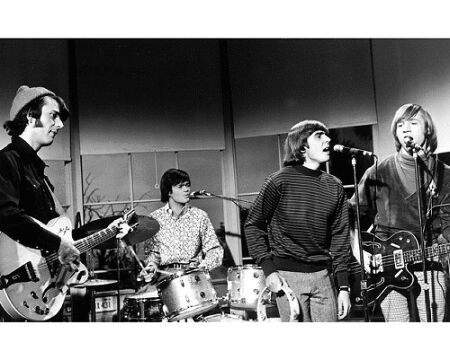
God Save The Clientele answers the question, What would The Monkees’ Davy Jones sound like fronting an indie pop band in 2007? The album-opening “Here Comes the Phantom” must buckle the knees of modern-day Marcia Bradys. The indie pop scene has been working toward the fulfilling the wish that Bread actually released more than three great soft-pop songs for years. Think of all the quarters that have been spent at used record stores in hopes of scoring that one great Bread album. The Clientele manage to turn out an album that sounds as consistently great over the course of an album as those scant great Bread songs that make only that band’s greatest hits album worth dropping a quarter on! “I Hope I Know You” and “Isn’t Life Strange” sound as if Elvis Costello spent a few weeks writing with David Gates himself to achieve this bargain-bin fantasy. Hell, I’m almost willing to think that Bread really were America’s answer to The Zombies all over again.
The Polyphonic Spree, that 40-piece collective of brightly colored robes and Kool Aid-sipping marching band freaks, sets itself a tougher task on The Fragile Army, trying – once more – to marry the symphonic pop delights of ELO to the feel-better sentiments of landmark ‘70s self-help tome I’m OK, You’re OK. The results are as muddy and unsatisfying as the many Roy Wood and Wizzard albums I’ve dropped a quarter on in hopes of finding one more whacked-out gem like Boulders. Like the worst of George Harrison’s solo works, instrumental breaks are constructed not so much to highlight expressive flights of musicality but to allow for the shimmying and hand-raising of all those robed backing singers. Damn flutes flutter at every given opportunity! Some songs start out perfectly cool, like “Younger Yesterday”, before getting bogged down by their up-with-life platitudes. Hey, I love life as much as the guy in the chartreuse robe, but let how about giving the life of the song itself some space? Other tracks, like “We Crawl”, identify the depressingly fine line between Eno and Styx. I went back and listened to some ELO albums, a Queen album, and the one-man recordings of Wood and Todd Rundgren. Do 40 musicians really contribute to the sound and ideas of The Polyphonic Spree, or am I correct in thinking their records sound smaller and shorter on ideas than any of a half dozen Elephant 6 releases made by a 10th of musicians? “Too much of nothing,” sang Bob Dylan, “can make a man feel ill at ease.”
In a recent thread, a veteran Townsman warned a new Townsman to steel himself, as follows:
watch it: plurb’s got a man crush on you. i don’t envy you the day you post an opinion he disagrees with…it’ll be diva time.
This warning was in reference to the growing appreciation and interest Townsman Epluribusgergely has developed in response to the expressed tastes by a relatively new Townsman, who will remain nameless. The “man crush” referred to is a particular kind seen around these parts: the Rock Man Crush. Usually a budding Rock Man crush is a wonderful thing to see blossom in the Halls of Rock. Mix CDs are burned, joint campaigns are launched to promote an obscure album, sometimes even face-to-face meetings are scheduled. In the case of the Rock Man Crushes involving our friend Epluribus, who’s become known as the Warren Beatty of love-em-and-leave-em Rock Man Crushes, there is a sense of dread. Let me explain the warnings of our veteran Townsman.
You’ve probably been on both ends of the Rock Man Crush. You spot a cool record in a new acquaintances collection – or he (or she) spies a cool record in yours – and in short time you’re hungry for some rock nerd bonding.
“Oh, you know that album too? I love that album!”
“Sure. You know that album? None of my friends like this album.”
In due time, two rock nerds are sitting cross legged around a stack of records and love is in the air!
It’s not unusual that the new rock crush eventually runs out of gas and the two rock nerds move on, thankful for their time of bonding and additions to their respective music collections. There are some among us, however, who fall more deeply than others, and the first time an undesired album comes between the new friends, the most-smitten friend feels betrayed and lashes out at the other. This describes the cycle we’ve seen – and in many cases felt – at the hands of Epluribus. It can get ugly. One day you’re best buds, the next day your manhood is called into question in front of all the super-cool rock nerds who gather here.
Here’s what I have in mind as a way of healing past rifts and perhaps helping Gergs to tread more gently in his Rock Man Crushes, to find a way to allow them to end more gracefully: If you’ve been through the ups and downs of a Rock Man Crush with Epluribus, please share with us the highs and lows, the joyous beginning and painful ending of this crush. I ask you to do to help our friend recall what was really important in each of these crushes, to appreciate the good times.
If you have another Rock Man Crush to share, one not involving Epluribus but that you find might be helpful, please share your experiences. Thank you.
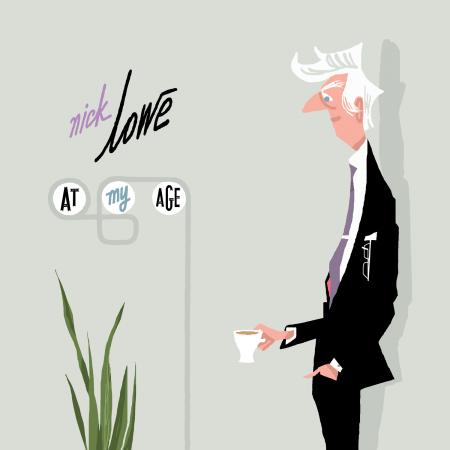
As all but the most tolerant, patient, and dedicated fans of Nick Lowe probably agree, shortly after Nick’s first two albums, the lone Rockpile album, and the breakup of the entire Rockpile working arrangement, the guy’s career hit a long stretch of mostly unsatisfying releases. Surely one of us is a greater fan of Nick the Knife or Party of One than the rest of us, and there’s probably even a Nick Lowe fan who regrets his breaking up His Cowboy Outfit, but let’s be honest, the guy lost his spark when he lost that Rockpile crew and from all accounts began changing as a person.
Lowe’s reemergence as an unabashedly adult artist following the release of 1994’s The Impossible Bird or 1998’s Dig My Mood, depending on when you began paying him any attention again, was a welcome and inspiring reemergence. I loved hearing this guy who’d always had a facility for classic pop traditions bear down and confront them head on. How many more mediocre to bad releases would it have taken to convince me that the guy could no longer turn pop conventions on their ear? The guy could have released 100 more albums in a “rocking” vein and never come up with another “I Love the Sound of Breaking Glass” or the exquisite “Cruel to Be Kind”. That’s cool, and what’s cooler is that he had the great sense to get out of the Jesus of Cool business and embrace the pop conventions that have always been at the core of his work.
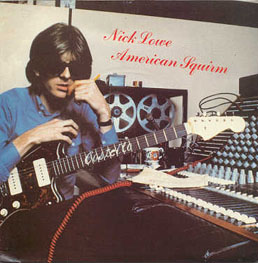
In an interview with Terry Gross on Fresh Air around the time of one of these mature albums, Terry asked Nick if there was a song that he loved that might suprise his fans. (This is a great question that Gross has asked musical guests over the years, and it could be a good thread for us here at Rock Town Hall someday, so keep it in mind.) Lowe’s song was Tommy Edwards’ ballad “It’s All in the Game”. He picked up his acoustic guitar and played a few measures of the song. It made so much sense, especially with his new direction. Dig My Mood and the follow up, The Convincer, each contained a few songs in that style (along with strong hints of Nat King Cole and The Platters). When he wasn’t crooning on those fine albums he was doing the sort of country-soul identified with the songwriting and production of Spooner Oldham and Dan Penn. His whole “changed man”/”man who’s finally found love” lyrical stance comes through loud and clear on these recordings, and I find them moving despite the “coffee table rock” aspects of The Convincer, in particular.
That brings us to his new release, At My Age. The whole adult rock/changed man thing continues to be at the foundation of his work and his publicity campaign, and that’s all cool. The songs on this album are highly reminiscent of songs from his previous “mature” works, and as far as dedication to craft goes, this is somewhat cool. The arrangements and recordings are still display tremendous taste and understatement, which is very cool, but I’m not sure that I’m cool with the same batch of songs, the same lyrics, the same stance. If Lowe has dedicated golden years of his career to recrafting classic pre-Beatles pop, is he hitting the wall that halted the great works of Lieber and Stoller and associated artists, like The Drifters? Is there a reason that great stuff went by the wayside that has nothing to do with racial ceilings and moptops?
I know some of you would like me to shut up with the backstory and talk about some of the album’s finest tracks, like “Long Limbed Girl”, “Hope for Us All”, and “I Trained Her to Love Me”. That’s cool. You’re excited to hear a report on his breezy collaboration with former student and flame, Chrissie Hynde, on the breezy, insignificant “People Change”. That’s cool too. I’ll tell you what, how about listening to the songs sampled here and digging them for yourself, discussing them as you see fit? Just click on the song titles with the mp3 links.
If there’s any problem with this album it’s that Nick and I are aging at different rates. As much as I appreciate him setting a dignified pace for rockers in their 50s – and believe me, this is a solid, enjoyable album and heads and shoulders above cynical “golden years” crap like that series of Rod Stewart Trashes the American Masters releases – I’m not ready to slow down that much yet. I want to hear Nick lash out at just one classic pop convention now and then. I know he’s a changed man. I know he’s finally found love, but he finally found that love 10 years ago. It’s time I hear about something slightly new, pitched somewhere slightly new. We can work through this together, I’m sure, Nick. If all works out, I’ll be your age one day too, and I’d rather feel what you’re feeling than whatever it is crotchety old Bob Dylan‘s feeling on his recent releases. Maybe Bob is still putting up a fight, but I wish he’d include a tune along the way, just as I’d like to hear Nick kick back the slightest bit. That’s cool, isn’t it?

First person to identify this gentleman racer wins a coveted RTH No-Prize.
I look forward to your responses.
A few Townspeople have been bugging me to restate my opinion that The Rolling Stones’ Beggars Banquet is the worst of the great Stones albums. I’ve been holding off on doing this for a few reasons, including the following:
As I’ve fiddled, Rock Town Hall’s dugout has started to smoulder with dialog such as the following:
Townsman Hrrundi: What’s wrong with you, boy? I just gave “Beggars Banquet” a quick scan for a reality check, and I was right — it’s a stinker! It’s got a few strong — in one or two cases, crucially important — Stones tracks, but in general, the album is chock-a-block with the worst kind of pretendo-country/blues nonsense. Really. I’ll give you “Street Fighting Man” and “Stray Cat Blues” — those are songs where the Stones actually bring something unique and Stonesian to the table. But all those acoustic snoozers? Gimme a break! Music to clean the bong by!
Townsman Epluribusgergely: Beggar’s Banquet will never be an LP for your ears. Why? 1) It doesn’t have your beloved written and recorded at Sam Ash sound that Aerosmith too favored when they recorded their version of “Walkin’ the Dog.” 2) There’s an originality in the pseudo country blues numbers that you’re not hearing, i.e. taking Harry Smith anthology material and making it dirtier, ethics and style wise. 3) There’s an overall emphasis on acoustic instruments. And 4) They thought Bob Dylan was good…
Although I’m impressed by Hrrundi’s opening salvo, I can’t trust that this discussion will proceed toward the final, necessary point without my involvement, so let’s get it on!
Continue reading »
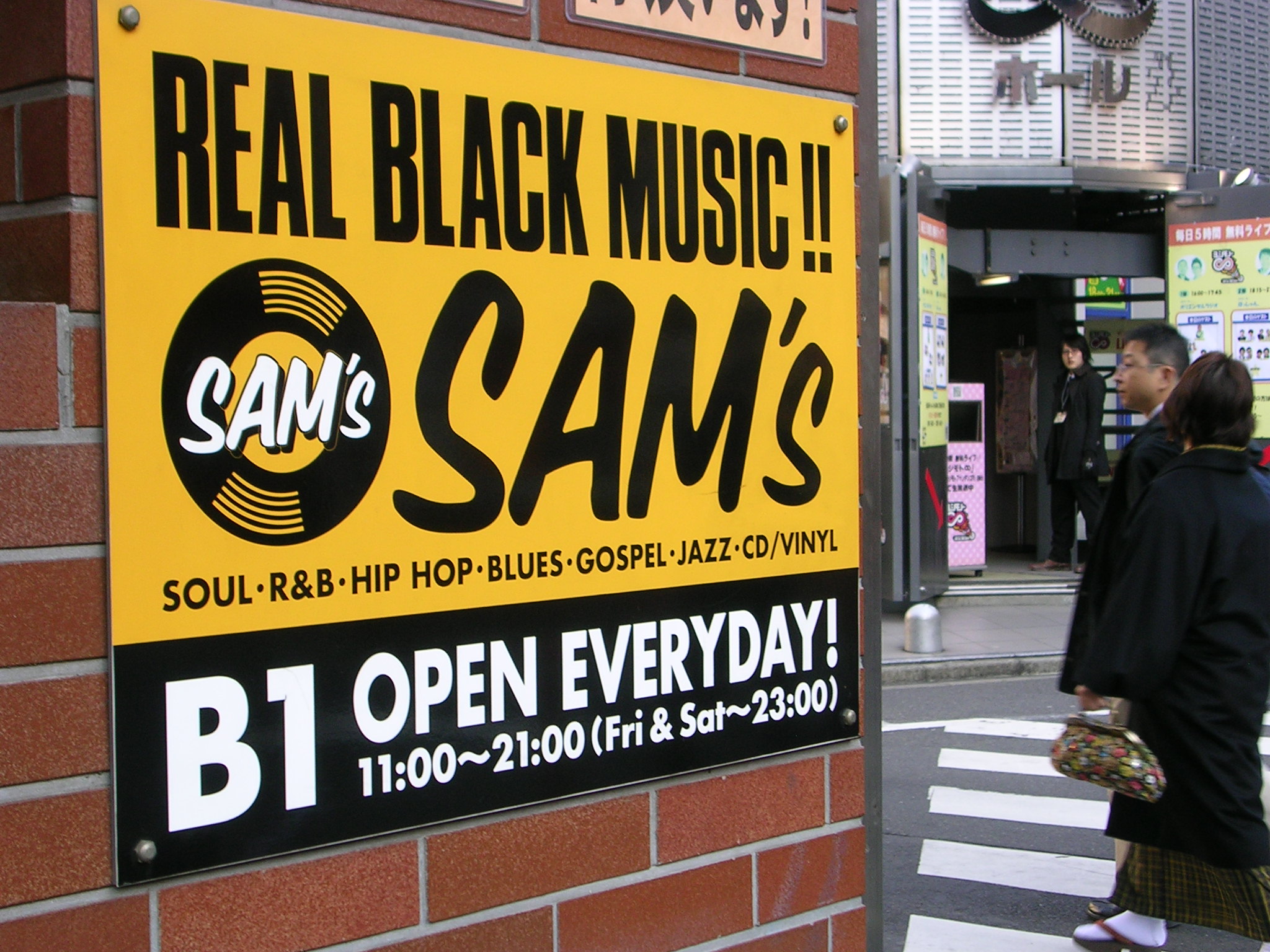
One of an occasional rock-related travel pieces submitted by a Townsman or Townswoman on the road! In today’s report, from a recent trip to Japan, Hrrundi lets his picture speak a thousand words. He adds only a mere 23 additional words to the story. Enjoy!