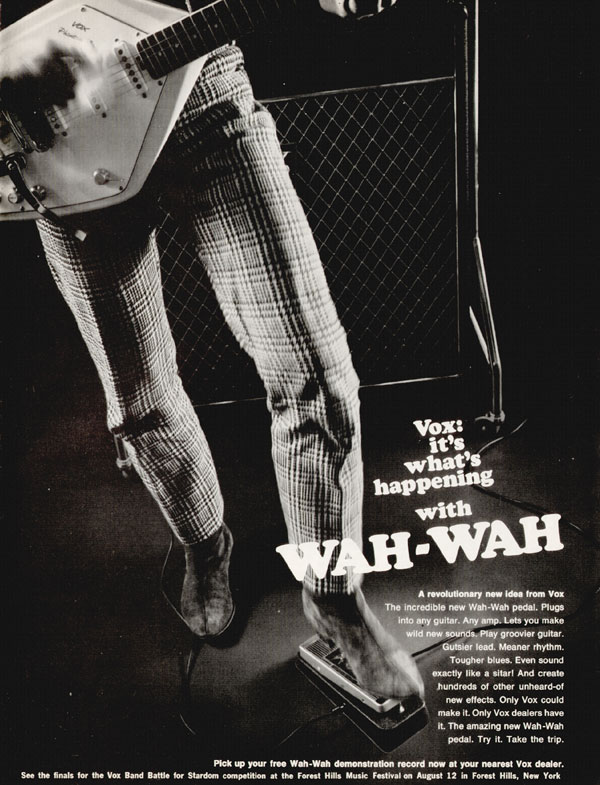
Raga Rock

 Posted by
Oct 162009


Although use of the sitar and sitar-like riffs in rock are most closely associated with George Harrison, doesn’t Ray Davies claim that The Kinks‘ use of sitar-like guitar tunings in “See My Friends” is rock’s first foray into Raga Rock? Who am I to argue? I’m sure there’s a rock nerd around here who can cite an obscure rock single from 1961 that first used a sitar. What I want to talk about is Raga Rock itself.

I thought about doing this as a Last Man Standing piece, but that could go on forever and serve no real purpose. Rather, I’d like your thoughts on some of the following issues, among others you’re sure to bring to the table:

  • Do you typically look forward, whether sincerely or in hopes of getting a laugh, to rock artists’ attempt at this style?
  • What’s your favorite Raga Rock song?
  • What band/artist – that did – would you have least expected to record a Raga Rock number?
  • What band/artist, to the best of your knowledge, would you have most expected to record in this vein – yet has not?
  • What variations on the Raga Rock approach have you found most impressive?

Continue reading »

Share
Oct 162009
 

In February 2009 Rock Town Hall commissioned 14 artists from around the world to depict iconic scenes representing Bruce Springsteen’s ascendancy to the undisputed throne of rock. The Stations of the Boss initiative is an effort to shine a light on the frequently overlooked iconic projections of The Boss and His E Street Band. We know Him as a Humble Man, a Common Man, and a Man of the People, but too often the media and even his own handlers downplay the positively messianic effect His performances have on followers.

To help rectify these oversights we asked our artists to base their works on actual images from His performances. Our first Station in this series, Bruce Is Condemned to Rock, depicts the fateful 2008 Super Bowl performance, pictured above, that sealed Springsteen’s legacy.

Our artist, Toby Wetland, from Bonners Ferry, Idaho, USA, painted this scene in the style of Paul Gaugin‘s Jacob Wrestling with an Angel. “For years The Boss struggled with maintaining His identity within the group collective,” says Wetland. “Although He is clearly stunned by the ref’s judgment, I wanted the painting to hint at the comforting role His bandmates play in helping Him acccept His destiny as leader of the E Street Band and no other collection of musicians.”

The original work of art, Bruce Is Condemnned to Rock, follows the jump.
Continue reading »

Share
Oct 162009
 

For my first ever post here on The Main Stage, in the hallowed halls of RTH, I would like to present someone who has a lot more experience in taking the stage, Barrence Whitfield, as he takes us all for a video tour of the used record store that he works at here in the Witch City, Salem, MA: The Record Exchange.

Share
Oct 152009


Rock Town Hall’s Department of Translation has uncovered the meaning of scrolling text at the foot of a 1970 video of Blood, Sweat & Tears performing “And When I Die.” For years translators have been unable to crack this lost Japanese dialect. Until now! The exact translation, which is believed to be a running commentary from an unidentified Japanese rock analyst, follows. Continue reading »

Share
Oct 152009


About 5 years ago I finally bought the standard Hall & Oates greatest hits collection, Rock ‘n Soul, Part 1. It was clear to me that there was no killer Hall & Oates album to be had, and for the right price I was will to bring home a hits collections that included some ’80s turds by an artist I liked best in the ’70s. Beside, as ’80s hitmakers went, I could live with my share of Hall & Oates hits like “You Make My Dreams” and “I Can’t Go for That (No Can Do).”

Over the years I kept feeling like something was missing from the collection of five or so Hall & Oates songs that made buying this hits CD for the right price. I listened to clips from each of their earlier ’70s albums in search of the hit that was not included, but it was not until I got to the band’s 1980 “New Wave” album, Voices, that I found the song I was missing: “How Does It Feel to Be Back.” Although the third highest-ranking song on the album (behind “You Make My Dreams” and the presumably-also-left-for “Part 2” cover of “You’ve Lost That Lovin’ Feeling”), the song did crack the Billboard Top 30 and it was in regular rotation on Philadelphia radio in its time. Listening to it now, it still stands up as a pretty stately power pop song, if not the most immediately catchy song in their catalog.

It’s funny how that song has lost its place in the band’s catalog, and I wonder if there are other hit songs you feel have suffered this fate owing to their not being included on an artist’s first greatest hits collection, perhaps with a Part 2 left long ago on the drawing board.

Share

Lost Password?

 
twitter facebook youtube