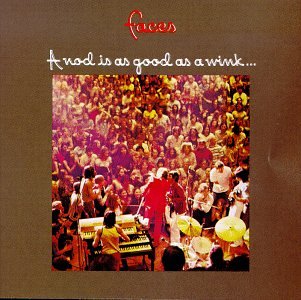
After Rod Stewart landed the shocking combo of Every Picture Tells a Story and two vibrant Faces albums in 1971, the Stones retreated to a distant corner in the South of France to gear up for a tougher battle than they’d expected. Jagger had trusted roadie, ivory tinkler, and confidante Ian Stewart cut the sac of blood and other fluids that threatened to close his right eye. Keef took Mick Taylor down to the pub, then chewed him out, telling him to stop dicking around with minor seventh chords. Wyman cruised Arles for a kinky mother-daughter team. Charlie made sure Purdie had his passport in order. The Stones dropped the Satan schtick once and for all, but there would be hell to pay in the form of Exile on Main Street.
I’m used to Sam Phillips albums being challenging on initial spins. A friend tried to turn me onto her in 1994, playing me Martinis & Bikinis, which he’d just bought. As he suspected, I dug hearing XTC’s Colin Moulding on bass, but the first time I heard it the album was too cluttered and claustrophobic for even my clutter-craving ears. About 2 years later, another friend who’d been trying to turn me onto Phillips and, for years before that, her husband/producer at the time, T-Bone Burnett, came to our house and left my wife and I with copies of both Martinis & Bikinis and a previous album, The Indescribable Wow. “Here,” he said, as he slapped the CDs onto our kitchen table, “it’s time you guys love these albums!” Continue reading »
Here’s where I expect sparks to fly. The Stones opened Round 1 with a furious set of haymakers. Rod Stewart had his best work stripped from him and added to its proper place in 1970, leaving him nearly defenseless against my favorite post-Brian Jones-era Stones album. However, despite chronological inaccuracies, my writing on Stewart’s early strengths was so strong that I managed to keep him standing and alert when the first round ended. In Round 2, Rod Stewart established his footing and skillfully accumulated points from the judges compared with the Stones’ party-hearty, contractually obligated “live” album. Now, as we enter Round 3, covering the artists’ 1971 releases, both contestants answer the bell looking to score an early knockout!
The Stones release of Sticky Fingers is loaded with radio-ready rockers and the richest ballads they’d displayed to date. There’s “Brown Sugar”, “Wild Horses”, “Can’t You Hear Me Knocking”, and “Bitch” for starters. There’s also the overrated “Moonlight Mile” among other highly regarded deep cuts. That’s cool: we’re all entitled to overrate a deep cut or two per great album.
Despite my never loving the album or feeling the need to own it, Sticky Fingers is a powerfully crafted album – and we’ll want to consider issues of craft in 1971’s tightly fought Round 3 – and the first Stones studio album to prominently feature the fretwork of Mick Taylor – and not an album too soon! As the times demanded extended jams and more stringent blues credibility, Taylor brought chops to the band that were already in place in upstart hard rock bands like Humble Pie and Faces. As great as his work in this period was, Keef wasn’t going to cut it as a lead guitar hero in the post-Altamont landscape.
In setting up this Battle Royale, I pledged to center the examination around the music, at least in the early rounds, but before we move on I’ve gotta give Mad Props to the album cover. Here’s a definite, early advantage for the Stones in comparison with the typically blah album covers associated with most of Stewart’s work during this period.
I’m sure you heard before I did that George Carlin died yesterday. I associate him with ’70s rock ‘n roll culture more than any other comedian. Was there a “rock ‘n roll comedian” before him?
Carlin was never a personal favorite, but I often found myself laughing at his bits, and I like this quote attributed to him:
“Scratch any cynic,” he said, “and you’ll find a disappointed idealist.”
Not safe for work (unless you’re, like, driving a big rig or working as a fishmonger).
In 1970, the Stones released Get Your Ya-Yas Out! Whether it’s still, as Lester Bangs declared upon its release, the greatest live album ever is open to debate, but most of us would agree it’s by far the best Stones live album – definitely better than the band’s 1970 appearance in Milan, Italy. Check out the live clip that kicks off this round: did they leave Bernard Purdie home for this show?
In terms of this Battle Royale, however, perhaps the most significant development was the actual release date of Rod Stewart’s first album with Faces, First Step, which was mistakenly identified and entered as a 1969 release in Round 1 of our Rod vs Stones, 1969-1976 showdown! This changes the landscape of this contest, relieving the Stones of some body blows in Round 1 while beginning to stack the deck in Rod’s favor in Round 2. Go back and listen to the Faces tracks posted in Round 1 if you don’t think the Stones’ best live album is already suffering in comparison.
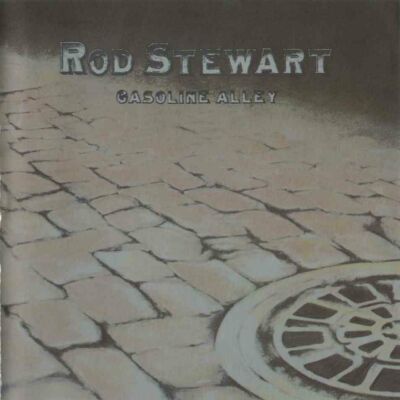
Building momentum for Rod’s 1971 campaign, 1970 also saw the release of Gasoline Alley, the first Stewart-associated release in which the man’s musical personality coalesced, without the residual effects of having recently sung for Jeff Beck’s proto-blooz rock outfit as well as the responsibility of helping Faces fit into the post-Marriott ’70s landscape. The title track, in particular, with its earnest, simple boy’s look back and folky arrangement, marks the beginning of Stewart’s most effective musical personality. Seemingly cognizant of this future analysis, Rod continues to build other pieces in his persona, with covers both the Small Faces‘ “My Way of Giving” (backed by his mates in Faces rather his slightly different backing musicians on the bulk of his early solo albums) and the Stones’ well-known cover of “It’s All Over Now”. Continue reading »