auwDHmK9CGk]
Talk amongst yourselves while I have a Paz attack.


auwDHmK9CGk]
Talk amongst yourselves while I have a Paz attack.
In rapid-fire style, Rock Town Hall wants to know what’s NOW PLAYING (or was most recently playing) as you read this post! How is it? Is there a story to tell? Would you recommend this to anyone? There’s not a minute to waste!

I am not of the Christmas persuasion. Not really of any persuasion per se, but in watching the one holiday special that still moves me, The Grinch Who Stole Christmas of course, the spirit of the season moved me to create the following gift.
See how many of the following you can identify.
UPDATED TRAINING WHEELS VERSION
Mary Christmas with Training Wheels
UPDATED UPDATED TRICYCLE VERSION
Tricycle Version
Having crossed Canada several times and lived in half our provinces, I can tell the mostly American patrons of Rock Town Hall one thing for sure about rock and roll in Canada. While Ottawa may be our capital, we have a hands-down, undisputed capital of rock and roll: Winnipeg.
In Winnipeg you either play hockey, play in a band, or both. Neil Young grew up there, The Guess Who (also known in Canada as “The Prairie Beatles”) were all from The Peg, and more recent artists like Chantal Kreviazuk, Remy Shand, and Bif Naked all picked up and instrument and headed to the basement on cold winter nights.
Whatever you think of Winnipeg, and the reports are not all good, Peggers are extremely proud of their hometown and their is a bit of an island mentality to the place. The best way to illustrate this phenomenon, and the point of this post, is a movie called The Phantom of the Paradise.
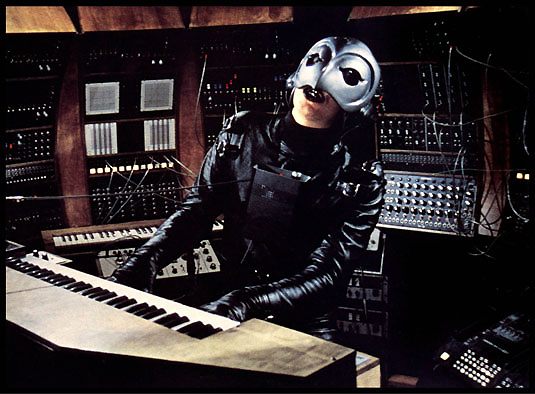
The Phantom of the Paradise is a 1974 “comedy-horror-musical tragedy” from a young director named Brian de Palma. The movie is generally regarded (when it is regarded at all) as a precursor to The Rocky Horror Picture Show. The movie flopped across the world and even in the rest of Canada. In Vancouver, Edmonton, and Calgary the film lasted a week and never returned. In Winnipeg, well…
Phantom is the biggest movie ever in Winnipeg. I first learned of this after three rocker friends of mine of a certain age referenced the movie constantly, as though it were The Godfather or Star Wars. They did not know that us non-Winnipegers did not know what the H-E-double hockey sticks they were talking about. I was sat down and forced to watch it. Better than I imagined, with a great soundtrack by Paul Williams. Of course, I didn’t like it enough to put on a massive party called “Phantompalooza,” like they do in Winnipeg every year. Oh yeah, pretty much the whole cast, including Paul Williams, attends this event. In case you’re wondering, this is not “hipper than though” digging on this movie; this is genuine love from people who were 8 to 12 years old when the movie hit.
I wonder, could this phenomenon happen in today’s Internet world? Probably not. Did it happen with another movie or record in your town? I am interested to hear…
In 2001, Billy Corgan, Smashing Pumpkins drummer/sidekick Jimmy Chamberlain, and members of Slint, Tortoise, Chavez, Toto, and A Perfect Circle, and launched Zwan, a Tin Machine-like “this is a real band, mannnnnnn” supergroup. (OK, maybe no one from Toto was involved.) The band released one album, Mary Star of the Sea, in 2003, before breaking up.
To my ears, in limited exposure, Zwan sounded a lot like Smashing Pumpkins. To my eyes, the bassist was a notch hotter. Until now, I had no idea the band’s full name was initially True Poets of Zwan. That fact notwithstanding, is it time we revisit Zwan for consideration of a Critical Upgrade, wouldn’t you agree?
Continue reading »
Hey, I finally got to watch the first two episodes of Spectacle: Elvis Costello with…, the new Sundance channel talk show, in which Elvis plays James Lipton to a legendary guest musician. I know some of you have been following this nascent show.
The first episode, with Elton John, was fantastic. The two immediately got down to musician-on-musician rock nerd talk, with Elton talking about being a young rock snob in England who thought it was cooler to buy American releases of records while his American counterparts were seeking the UK releases. There was little to no typical rock mythologizing about drug abuse, sexual escapades, and a career’s worth of landmark hair architecture. This was a music talk show for the few of us who got into this for reasons other than “meeting chicks.”
Continue reading »
Among rock nerds Jim Croce seems to be a rare, successful singer-songwriter from the ’70s who’s hard to hate? Some of his contemporaries, like Jackson Browne, have achieved greater critical acclaim from the post-Me Decade crowd, yet there are those unwilling to forgive the heap of Psychic Oblivion he laid on that generation. Although Croce’s hit songs include the wedding dance with Dad staple “Time in a Bottle,” you never hear people like us cut on Croce, do you?
Among Croce’s soft-rock contemporaries, only James Taylor comes close in not having made enemies. In the case of both artists I think their avoidance of trends, their sense of decency and taste, and overall “class” contributed to their acceptance over time and regardless of mixed feelings any of us might have about their popular acceptance and airplay saturation. (The respect we have for Taylor’s soft rock also probably has something to do with the guy’s graceful acceptance of his baldness.) The other thing I think they had in common is that they were clearly fine musicians. It’s hard not to respect fine musicianship, especially when it’s presented in an unadorned fashion. Croce, especially, came off as a “musician’s musician.”
Apart from the psychic drama of the short life of Nick Drake, we also got the clear impression of fine musicianship, taste, decency, and class. I’ve never been the type to plunge into trying to learn the finger-picking styles in the music of either Drake or Croce, but it’s my understanding that each man’s music included a distinct, difficult, personal style that is both challenging and satisfying for those who try to learn it.
I don’t know that it’s happened yet, but with more personal problems and fewer record sales could Jim Croce have been America’s answer to Nick Drake?


