Mr. Moderator

Mr. Moderator

When not blogging Mr. Moderator enjoys baseball, cooking, and falconry.

Jan 162007
 

Bono holsters his guitar.

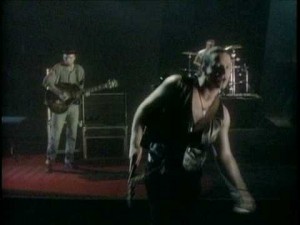
Holstering is the practice of a lead singer wearing a guitar but rarely playing it, rather flipping it back on his or her hip for all but a chorus or solo, if that. Bono and Mick Jagger are two of the move’s best-known practitioners. As is typical of practitioners of holstering, Bono and Jagger appeared onstage without a guitar for years before attempting to impress audiences with their newly acquired ability to strum a major chord. Roger Daltry would also debut a holstered guitar well into the career of The Who.
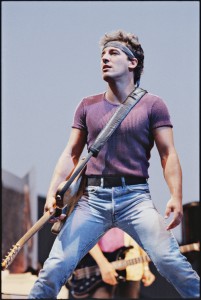
The Boss holsters a la Rambo!

It should be pointed out that holstering is not the domain of formerly axe-free lead singers alone. There are veteran guitar-playing singers who decide to holster their guitar on songs with rhythms beyond their capability, or they holster their guitar to better emote through a key verse or chorus. Joe Strummer often resorted to holstering for both of these reasons. Bruce Springsteen has also been known to holster his guitar to better focus on showing the audience how committed he is to the particular verse he’s singing. The Boss has also been known to holster for more practical reasons, such as those final choruses on his epic songs, in which multiple bandana-clad guitarists and backing singers gather around a single mic in an Iwo Jima-like show of heroic band unity.


Share
Jan 162007
 

Used on Rock Town Hall as a noun to indicate a musician’s sense of style, as in musician want ads that state “Must have Look!” or the undeniable fact that Brian Jones had a great Look!” There are some who claim that Look is not all it’s cranked up to be in rock ‘n roll, but would the band Blondie have had to print up buttons to clarify its group status had Debbie Harry looked more like Tina Yothers?

Share

Pince Nez

 Posted by
Jan 162007
 

…a style of spectacles, popular in the 19th century, which are supported without earpieces, by pinching the bridge of the nose. The name comes from the French for “pinch nose.”

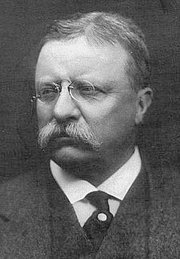
When the term pince nez is brought into discussion on Rock Town Hall, as in, “Please forgive me for wearing the pince nez, but…”, or “Don’t go pince nez on me!” it’s an acknowledgment or accusation that someone is being overly nerdy and picky for even this group of rock nerds.

Share
Jan 162007
 

Rock ‘n roll…My life was saved by rock ‘n roll. Forever more I will give it up for The Power & Glory of Rock.

Shortly after the ‘n Roll was dropped from Rock ‘n Roll and long-haired, bearded bands took the stage at open-air festivals, backed by a phalanx of amplification, to play Rock music, these same bands felt the need to get back to rock’s roots. The Beatles got back. The Stones, who’d barely left rock’s roots through their Brian Jones years, wisely ditched the hashish and dashikis and got way back to rural American blues. The Band and Traffic holed up in the countryside. The Byrds went the trad-country route. The rock world called on Sha Na Na to help reclaim that prematurely dropped ‘n Roll. Getting back.

Getting back and joining together, man, in the form of a band! Rock’s Premier Seeker, Pete Townshend, was ripe for rallying behind The Power & Glory of Rock. The Who and The Move, led by eccentric, multi-instrumentalist, conceptualist Roy Wood, applied the thunderous, plodding riffage of their bands to early Rock ‘n Roll’s walking bass lines and pounding piano-driven rhythm sections. Lyrics might commemorate the innocence of early Beach Boys, as The Move did in “California Man” (by this point with Jeff Lynne in the fold, who would continue as a proponent of The Power & Glory of Rock as The Move transformed into ELO) and or celebrate the everlasting Power & Glory of Rock itself, as The Who did so memorably in “Long Live Rock”.

When giving thanks and praise to The Power & Glory of Rock, it’s not enough to sing of innocent times and imagined dance steps, it’s not enough to restore the slightly frantic, swinging rhythms that marked the genre’s explosion onto the pop culture landscape. No, every shred of humanity in each riff and downbeat must be thrust to the fore, revived, exploited. The song becomes secondary. The act of getting back becomes secondary. Rather, it is the act of giving thanks and praise itself that comes to represent The Power & Glory of Rock.

Share
Jan 162007
 

Ah, Psychic Oblivion. A sleazy but genteel white, middle-class self-obsession that finally focuses on the negation of that same self in a long, slow, meaningless fadeout in obscure locations that’s accompanied by a soft-rock soundtrack. Think of it as soft-rock existentialism. See as typical examples the complete ouevre of James Taylor and Jimmy Buffet’s “Margaritaville.” Extra points for recognizing why “Cheeseburger in Paradise” is a stone cold Psychic Oblivion classic.

(Submitted by our West Coast Townsman.)

Share
Jan 152007
 

Rock ‘n roll is rife with ambitious failures and outright flops, and the marketplace has its way of dealing with artists who produce such works. One of the things we keep watch over at Rock Town Hall is Rock Crimes. In some cases, Rock Crimes are bitterly debated, but every effort must be made to guard against their spread, even at the risk of unfairly bringing charges against an otherwise fine and groundbreaking artist for inspiring countless bad imitators. Rock Crimes can be committed in the form of songs, live performances, videos, or even stage dress or cover art. Typically, they are the work of critically acclaimed, influential artists. Recently voted, ROCK CRIME OF THE CENTURY by our good townspeople is the 1985 video for Ja-Bo’s (Mick Jagger and David Bowie’s) cover of “Dancing in the Street”. Over the course of the video, the duo manage to offend and betray all sense of cool rock decorum, from the first ass-kissing geographical shoutouts and Jagger’s matching Day-Glo green sneaks and blouse to both men’s Zuba pants and Bowie’s longcoat – not to mention dance moves out of a Dr. Pepper ad and the gated drums necessary for any generic attempt at cashing in on Live Aid. All that was cool about Jagger and Bowie headed straight for the dumper; to this day, their greatest works are tarnished by memories of this collaboration. You will find that many Rock Crimes are self-directed, and you may ask, “What’s the big deal?” Listen, we need a few artists to remain larger than life. It’s part of what fueled the genre in the first place. The more time you spend in the Halls of Rock, the more you will become aware of the Rock Crimes around us. We trust that you will do your part in bringing these possible crimes to our attention.

Share

Seger…

 Posted by
Jan 152007
 

As in Bob Seger, the patron saint of well-intentioned rockist mediocrity. In Rock Town Hall, mere mention of The Sege brings to mind everything from the hands-down winner of his ’60s garage classic “Ramblin’ Gamblin’ Man” through the earnest, epic, sentimental “Night Moves” and “Against the Wind” and the downright pathetic “Old Time Rock ‘n Roll”. His name is used to represent all that was pretty good and has since gone horribly wrong with Classic Rock. Some would argue that the man set a standard that is suprisingly difficult to meet yet vital, for each generation, to surpass.

Share

Lost Password?

 
twitter facebook youtube