Tags: chicago
Critical Upgrade: Zwan
By Mr. Moderator on Dec 15, 2008
In 2001, Billy Corgan, Smashing Pumpkins drummer/sidekick Jimmy Chamberlain, and members of Slint, Tortoise, Chavez, Toto, and A Perfect Circle, and launched Zwan, a Tin Machine-like "this is a real band, mannnnnnn" supergroup. (OK, maybe no one from Toto was involved.) The band released one album, Mary Star of the Sea, in 2003, before breaking up.
To my ears, in limited exposure, Zwan sounded a lot like Smashing Pumpkins. To my eyes, the bassist was a notch hotter. Until now, I had no idea the band's full name was initially True Poets of Zwan. That fact notwithstanding, is it time we revisit Zwan for consideration of a Critical Upgrade, wouldn't you agree?
Billy Corgan: The Limits of Winner Rock
By Oats on Dec 11, 2008

Is it just me, or does this highly entertaining interview with the head Smashing Pumpkin say something about The Limits of Winner Rock?
Energy we can do something with. Apathy we can’t work with. Who’s above us? Who’s lighting the culture on fire? Nobody. We don’t have to live in that world. We have the biggest manager [Irving Azoff] in the world. He tells us we can get there, we will get there. We will crack the egg like we did in ‘92, without doing something embarrassing like working with Timbaland. We will find how to do our thing and make it work. I can write songs. We’re big boys. We’ll do it.
Is this what happens when you treat every single musical endeavor like you're entering the ring? Is Corgan emulating post-game press conference-speak to an almost ridiculous level here?
Let me be blunt. When Bruce Springsteen puts out a new album I pay attention. Same with Neil Young. Because they’re major artists who have something to say. I consider us in that category. When we do something it should be taken seriously, even when we’re off. If we’re marginalized by the culture, we’re not going to play dead and say thank you for our B-plus status.
Admirable chutzpah, to the say the least, but I want to tell Bill: Saying so doesn't make it so!
Urge Overkill revival. It's time.
By northvancoveman on Dec 6, 2008
In the early '90s, in Vancouver, a friend dragged me to a show by a band from Chicago called Urge Overkill. Good show, good band, nothing earth shattering. Then a couple years later he sat me down and put on a record called Saturation. We played that thing into the ground. This was a record that was simply not of the times. Urge Overkill didn't look or sound the same as anyone else. They were inspirational. And they rocked hard.
Now, if you remember Urge Overkill you may be one of those people who had a problem with their image: they rode around in a convertible wearing smoking jackets and drinking martinis. They lived in an old bank with their massive record collection. It rubbed some people the wrong way. But not me. I had seen enough flannel for one lifetime.
The most important thing is this: the songs stood up and they still do today. Pretty much everything on Saturation is a knockout. Supersonic Storybook before it was top notch. Their swan song, the dark, stripped down Exit the Dragon? We didn't like it at the time, none of us. But guess what? I threw it on the other day and it had aged, to me, like fine wine. Check out "The Break" and "Jaywalking." It's time for an Urge revival.
Hear Factor: It's Blood, Sweat & Tears Your Mod So Fears
By Mr. Moderator on May 15, 2007
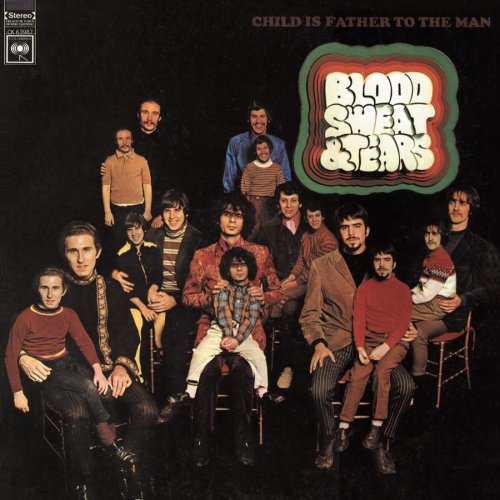
When a Townsperson sent in Blood, Sweat & Tears' 1968 album, Child Is Father to the Man, I knew which Hear Factor CD would be staying with me. It's well known around here that I consider the band's version of "And When I Die" the song I hate most in rock. "Spinning Wheel" isn't far behind. "You've Made Me So Very Happy" is another song I dread hearing. All that brassy bombast couched in Love Generation threads creeps me out. I like my share of velvet-jacketed '60 bombast as well as my share of hippie music, but the Blood, Sweat & Tears I'd grown up hearing got the mix all wrong, and I hold them responsible for the similarly brassy, bombastic sound of the bands Chicago and Earth, Wind & Fire.
Before I gave this album even one spin, I tried to calculate whether it would be better or worse not having David Clayton-Thomas sing on this album. I knew this album was from their early period, when Al Kooper, was thought of as some kind of blues-jazz-rock visionary and still is in some circles that consider it worth talking to him about anything but his fortunate and vital role in Bob Dylan's "Like a Rolling Stone". Clayton-Thomas was the voice of these hits I grew up hating, but the specter of Kooper was no stroll in the park for me as well. As I've made clear, his work in merging big band sounds with pseudo-hippie rock crossed the line with me, a line that I grew up more than willing to toe with my cherished childhood collection of Joe Cocker records. Now that was some horn-driven hippie rock. Let it all hang out! No blackface routine and embarrassng oom-pa-pa's from The Mad Dogs and the Englishmen. But I digress.

Child Is Father to the Man opens with an obligatory, for the times, "Overture". To my surprise, it was a pleasant string-driven melody that was devoid of the brassy bombast I'd come to dread in the music of Blood, Sweat & Tears. I guess the overture has made a comeback in the last 10 years, with the spate of Elephant 6-related bands who feel the need to allow listeners a minute to settle in. Not bad at all.
With the first proper song, however, I got my first expected taste of BS&T. "Love You More Than You'll Ever Know" opens with electric piano and white jazz-blues singing. In due time the song is punctuated by those big, brassy horn arrangements. Sweet Daddy-o, how I cringe at that sound! On Day 1 of my listening experience I wrote in my journal,
"Blood, Sweat & Tears must have helped a lot of high school band geeks feel like they were part of the revolution. And this must be the kind of music Paul Weller revisited to give him the strength he needed to start recording all those songs from his solo album that I skip,"
By Day 2 this song inspired the image of a greasy, pock-marked guy with a thin goatee dry humping a black Lycra-clad, halter top-wearing barfly on the small dance floor of a neighborhood bar. Thankfully things would pick up.
Chillin' with The Iceman
By Mr. Moderator on Apr 2, 2007
A Trayful of The Iceman: Click image for iTunes Mix.
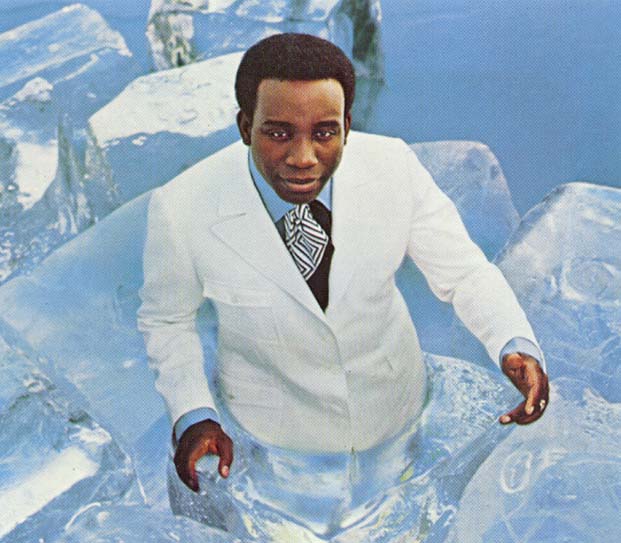
Jerry Butler, "You Make Me Feel Like Someone"
In conjunction with partner Curtis Mayfield, Jerry Butler was a Chicago soul architect and founding member of The Impressions before launching his solo career, initially with continued collaboration with Mayfield. "The Iceman," as Butler was known, sang about the transformative powers of love with the best of them. He also sang about being a man, or a mensch, if that helps you understand what I'm saying without thinking in terms of blues-based braggadocio. I know these are among corniest, cliched, and suspect claims one will make regarding a musician in this day and age, but bear with me.
Following are two examples of Butler's work on the Vee-Jay label.
Half-Assed Rant: Chicago, World-Class City/Third-World Rock Legacy
By andyr on Jan 31, 2007
Is there any city as cool as Chicago that has produced a legacy of such insignificant rock bands? I’m not talking about Chicago’s excellent R&B and Blues scenes, but rather the Windy City’s white-boy rock lineage.
Starting with the 1960’s, the Second City gave us such musical luminaries as The Shadows of Night, The Buckinghams (kind of a drag, indeed!), The Cryin' Shames, New Colony Six, The Ides of March, and of course, Chicago. With the exception of Chicago (the band), the compete sum of the above mentioned bands’ hits could barely fill a Greatest Hits CD (believe me, I know my GH collections).
The 1970s gave us, if we consider the broad Chicago region, Styx, Cheap Trick, Shoes, Survivor, and that’s probably - thankfully - it. With the exception of the number of strings that a bass guitar can hold, none of these bands is going down in history as having changed anything.